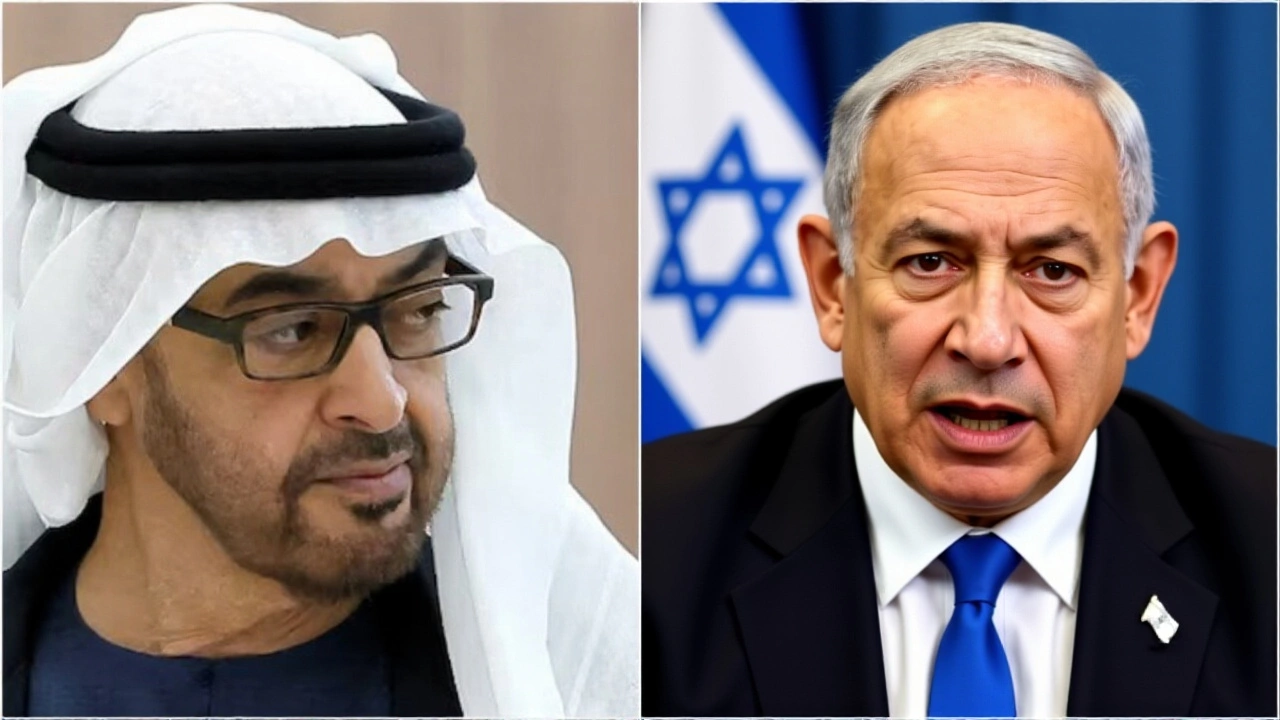
The diplomatic bridge between Israel and its closest Arab ally is cracking. On September 4, 2025, reports emerged that the United Arab Emirates has issued a stark warning to Jerusalem: any move to annex parts of the West Bank will be treated as a "red line" violation. This isn't just polite diplomatic language; it’s a direct threat to the future of the Abraham AccordsWashington D.C., the historic peace framework signed in 2020.
Here’s the thing: for years, the UAE was hailed as Israel’s "sole Arab friend." They opened embassies, traded technology, and normalized relations when almost no one else would. But now, amid relentless military operations in Gaza, Abu Dhabi is pulling back. The UAE had already expelled Israel’s ambassador earlier this year—a rare and severe diplomatic snub. Now, they are drawing a line in the sand regarding the West Bank.
A Fractured Alliance
The tension stems from a fundamental breach of trust. When the Abraham Accords were brokered in 2020, the deal included an implicit understanding. In exchange for normalization with the UAE, Bahrain, Morocco, and Sudan, Israel agreed to suspend plans for annexing Palestinian territories in the West Bank. At the time, Israeli officials called suspending annexation the "most important decision" of the agreement.
But wait. Recent developments suggest that suspension is no longer holding. Reports indicate that Israel is drafting new plans to formally annex certain occupied areas of the West Bank as part of a broader post-conflict strategy for Gaza. For the UAE, this feels like a betrayal. They didn’t normalize relations to watch Israel expand its control over Palestinian land without consequence.
The shift is dramatic. Just a few years ago, the relationship was booming. Tourism flowed, tech startups collaborated, and high-level visits were common. Today, the mood in Abu Dhabi is icy. The expulsion of the Israeli ambassador was the first crack; the current warnings about annexation are the fracture spreading.
The Red Line Warning
According to reports from Aaj Tak and corroborated by regional analysis, the UAE’s message is unambiguous. If Israel proceeds with annexation under its Gaza plan, it crosses a red line. The UAE government has stated that such a move would directly impact the normalization agreements established under the Abraham Accords.
"This is not just a policy disagreement," one diplomatic source noted. "It is a challenge to the core premise of the 2020 deal." The UAE views the West Bank issue as non-negotiable. By pushing forward with annexation, Israel risks unraveling the entire diplomatic architecture that brought these nations together.
Interestingly, the UAE is not acting alone in its frustration, but it is the most vocal. Other signatories of the Abraham Accords have remained quieter, perhaps fearing similar fallout or hoping to maintain their own strategic ties with Jerusalem. The UAE, however, has positioned itself as a leader in the Global South and a key player in Middle Eastern diplomacy. It cannot afford to be seen as complicit in what many view as a violation of international law.
What Led to This Breakdown?
To understand why this matters now, we need to look at the timeline. The Abraham Accords were signed on August 13, 2020, in Washington D.C. They marked a historic shift, ending decades of hostility between Israel and several Arab states. The deal promised economic cooperation, security partnerships, and cultural exchange.
However, the war in Gaza, which escalated significantly after October 7, 2023, changed everything. The humanitarian crisis in Gaza has drawn widespread condemnation, including from Arab nations. While the UAE has provided aid, it has also criticized Israel’s military conduct. The combination of civilian casualties in Gaza and the renewed push for West Bank annexation has created a perfect storm for diplomatic failure.
The UAE’s decision to expel the Israeli ambassador was a clear signal that patience was wearing thin. Now, the explicit warning about annexation suggests that the window for reconciliation is closing fast. If Israel ignores this warning, the consequences could be severe—not just for bilateral ties, but for regional stability.
Broader Implications for the Region
If the UAE pulls out of the Abraham Accords, the ripple effects will be felt across the Middle East. The accords were seen as a blueprint for broader peace, potentially including Saudi Arabia. A collapse in UAE-Israel relations could derail those hopes entirely.
Moreover, it sends a message to other Arab states that normalization comes with conditions—and consequences. It reinforces the idea that public opinion in the Arab world cannot be ignored indefinitely. Governments may want peace with Israel, but their populations demand justice for Palestinians.
For Israel, losing the UAE as a partner is a significant blow. It loses a key economic and technological ally, as well as a potential mediator in future conflicts. More importantly, it isolates itself further on the international stage, facing increased pressure from Europe, the US, and global institutions.
What’s Next?
The details of Israel’s final annexation plan are still unclear, but the rhetoric is heating up. Diplomatic channels are likely working overtime behind the scenes to prevent a total breakdown. However, if Israel moves forward with formal annexation steps in the coming months, expect the UAE to take concrete actions—perhaps freezing trade deals, halting tourism, or even reviewing security cooperation.
The world is watching closely. This isn’t just about two countries; it’s about the future of peace in the Middle East. Can diplomacy survive when promises are broken? Only time will tell, but right now, the odds don’t look good.
Frequently Asked Questions
What are the Abraham Accords?
The Abraham Accords are a series of normalization agreements signed in 2020 between Israel and four Arab nations: the United Arab Emirates, Bahrain, Morocco, and Sudan. Brokered by the United States, the accords aimed to establish diplomatic relations, enhance trade, and promote regional stability. They were named after Abraham, a patriarch revered in Judaism, Christianity, and Islam, symbolizing shared heritage.
Why is the UAE threatening to revoke the agreement?
The UAE is concerned that Israel’s plans to annex parts of the West Bank violate the spirit of the 2020 deal. When the accords were signed, Israel agreed to suspend annexation efforts. The UAE views any reversal of this commitment as a breach of trust, especially given the ongoing humanitarian crisis in Gaza. They fear that annexation undermines the possibility of a two-state solution and alienates Arab publics.
What does "expelling the ambassador" mean?
Expelling an ambassador is one of the strongest diplomatic protests a country can make. It means the host nation declares the diplomat persona non grata, forcing them to leave immediately. This action signals deep dissatisfaction and often precedes a downgrade in diplomatic relations. In this case, the UAE expelled Israel’s ambassador earlier in 2025, marking a significant deterioration in ties.
How does this affect other Arab countries?
If the UAE withdraws from the Abraham Accords, it could embolden other Arab nations to reconsider their own normalization deals. Countries like Jordan and Egypt, which have long-standing peace treaties with Israel, might face increased domestic pressure to review their policies. Additionally, Saudi Arabia, which has been negotiating normalization, may pause talks until the situation stabilizes.
What is the "West Bank annexation" plan?
Annexation refers to the unilateral incorporation of territory into a state’s sovereign domain. Israel currently occupies parts of the West Bank, home to hundreds of thousands of Palestinians. Annexation would legally extend Israeli law, jurisdiction, and control over these areas, effectively ending hopes for a contiguous Palestinian state. The UAE and other Arab nations oppose this as illegal under international law.